Is Texas a Hands-Free State?


Every article on this site is researched by our internal team, reviewed for legal accuracy against current Texas law, and held to State Bar of Texas advertising standards before publication. We do not publish content that overstates outcomes or makes promises about results.
Learn more about our
editorial standards .
Key Takeaways
- Texas bans texting while driving statewide but allows handheld calls, except in hands-free cities.
- Austin, Dallas, San Antonio, and El Paso require fully hands-free driving inside city limits.
- Phone records and ordinance violations are strong evidence in Texas distracted driving claims.
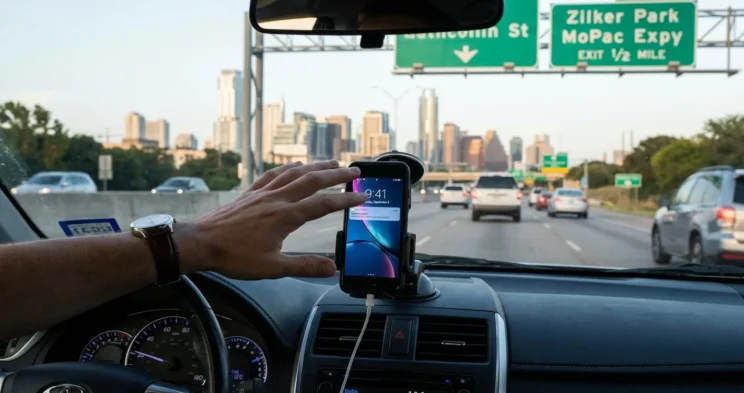
You’re driving down MoPac near Zilker, your phone buzzes, and your hand drifts toward it. You pause. Is this a ticket waiting to happen, or are you fine as long as you don’t type? The answer depends on where in Texas you are.
Any distracted driving is dangerous. However, our dependence on mobile devices means they can often demand our attention too much while we’re on the road. While cell phones make it easier for Texas drivers to access everything they need, texting while driving and using handheld devices are among the leading causes of car accidents globally.
Is Texas a Hands-Free State?
Texas is not a full hands-free state at the statewide level. Since 2017, Texas Transportation Code SS 545.4251 has banned drivers from reading, writing, or sending electronic messages while a vehicle is moving.
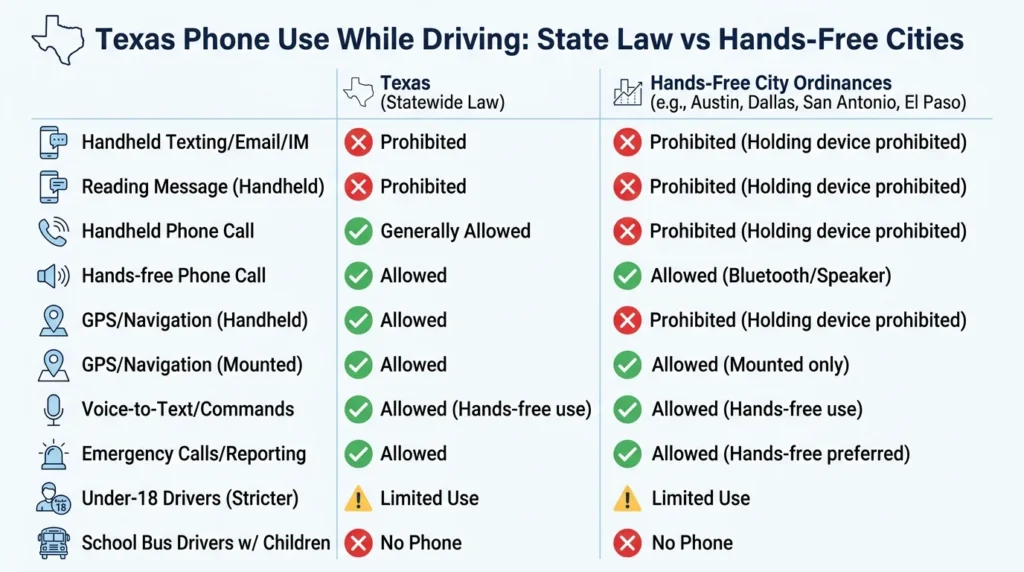
The statewide ban covers texting, emailing, and instant messaging on any handheld device while you’re behind the wheel and on the road. It applies whether you’re stopped at a light on Nacogdoches Road briefly or rolling through traffic on I-37. The law treats the act of typing or reading a message as the violation, not just sending one.
There are narrow carve-outs. You can use a phone to report an emergency. You can use voice-to-text features and other hands-free functions. Drivers under 18 face tighter restrictions, and school bus drivers carrying children cannot use a phone at all.
Voice calls remain legal under state law, but local rules can be stricter. Under state law, a quick voice call is allowed. But that same call may break the law a few miles down the road, depending on the city limits you’ve crossed.
City-Level Hands-Free Ordinances
Several Texas cities go further than the state. They require drivers to be fully hands-free, meaning you can’t hold a phone for any reason while driving, including for calls, GPS, or music apps. These local ordinances apply to anyone driving within city limits, including visitors.
Austin passed one of the earliest and broadest hands-free ordinances in the state. Drivers in Austin cannot hold a phone or other electronic device while operating a vehicle or bicycle. Bluetooth, speakerphone, or a dashboard mount are all acceptable workarounds.
Dallas has its own hands-free driving rule that prohibits using a handheld device while driving inside city limits. San Antonio and El Paso have similar ordinances on the books. The exact wording varies, but the practical result is the same: pick up the phone, risk a ticket.
These local rules expand on the state texting ban by covering activities the state law allows, like holding a phone during a call or scrolling a playlist.
Penalties & Enforcement
State fines for texting while driving range from $25 to $99 for a first offense. Repeat violations can climb to $200 or more. If texting causes a crash that injures or kills someone, you could face criminal charges on top of civil liability.
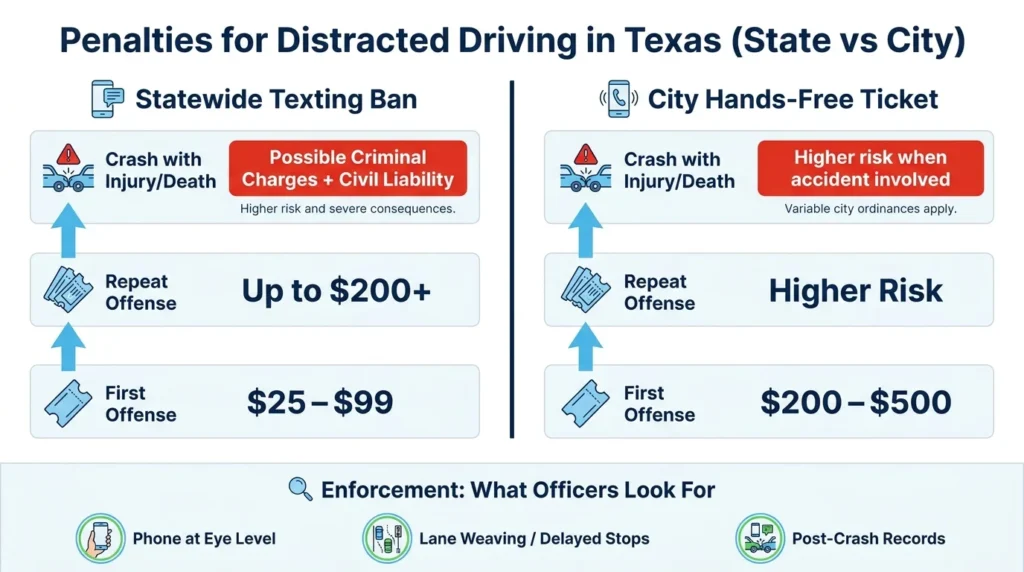
City ordinances carry their own penalties. Austin and Dallas fines for handheld device use typically run between $200 and $500, depending on the circumstances and whether an accident was involved. Officers can issue tickets based on direct observation, and the Texas Department of Transportation supports active enforcement campaigns each year.
Enforcement usually starts with what an officer sees. A driver holding a phone at eye level, weaving between lanes, or rolling through a stoplight while looking down is an easy stop. After a distracted driving accident, investigators may pull phone records or vehicle data to confirm device use at the moment of impact.
Distracted Driving Accidents & Legal Evidence
When distracted driving causes a crash, the violation itself becomes powerful evidence in a civil claim. Texas follows a fault-based system, so showing the other driver was texting or holding a phone can directly support your right to compensation. Phone records, witness statements, and police reports can support your case.
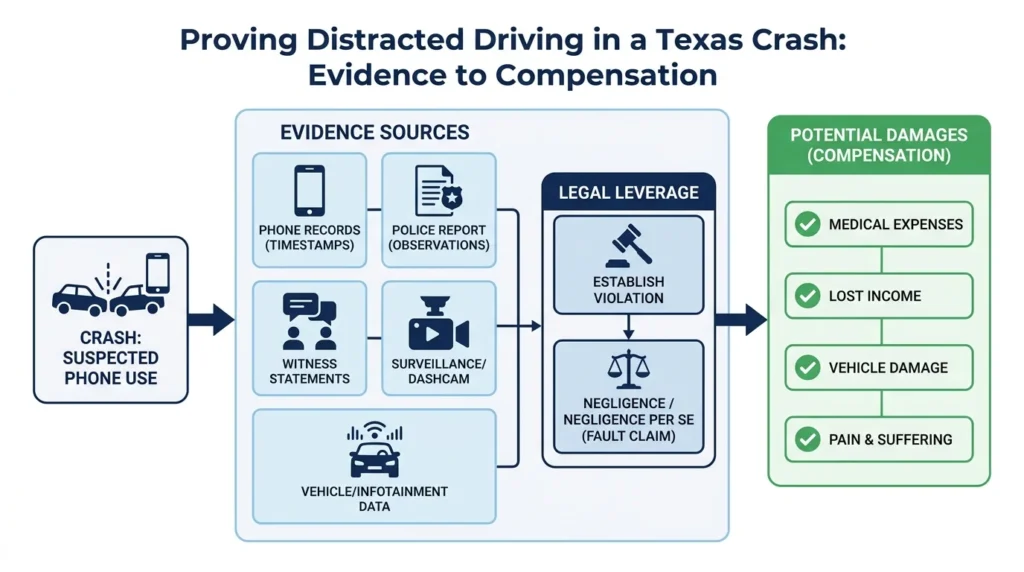
Cell phone records are routinely subpoenaed in serious injury cases. These records show call times, text timestamps, and data use down to the second. When that activity lines up with the time of the crash, it builds a strong picture of inattention. Vehicle infotainment data and surveillance footage from nearby businesses can add to the timeline.
A violation of the state texting ban or a city hands-free ordinance can also support a negligence per se argument. That means breaking a safety statute is itself proof of negligence, without the need to argue what a reasonable driver would have done. Understanding Texas car accident laws and your legal options after a distracted driving crash can help protect your rights.
Damages in these cases may cover medical bills, lost wages, vehicle repair costs, and pain and suffering. NHTSA data shows distracted driving killed 3,208 people nationwide in 2024, and Texas recorded significant distracted driving crash numbers with over 91,000 such crashes in 2024. If a driver’s phone use contributed to your injuries, that conduct deserves to be on the record.
Work with a Texas Car Accident Attorney
If a distracted driver hurt you or someone you love, the path forward starts with a clear-eyed look at the evidence and the law. Angel Reyes & Associates has over 30 years of experience helping Texas crash victims hold negligent drivers accountable, with more than $1 billion recovered for clients.
We offer free consultations, work on a no-fee-unless-we-win basis, and serve clients across the state in English and Spanish. Reach out through our contact page to talk through your car accident claim with a member of our legal team.
Past results do not guarantee future outcomes.
Texas Texting While Driving FAQs
Can passengers use phones in vehicles covered by hands-free ordinances?
Most Texas city hands-free laws only apply to drivers, not passengers. Passengers can typically use handheld devices freely while someone else drives.
What happens if you get a hands-free violation while visiting from another state?
Out-of-state drivers must follow local Texas laws and can receive tickets for violations. The citation may affect your driving record in your home state, depending on interstate agreements.
Do hands-free laws apply in parking lots and private property?
Texas hands-free ordinances typically apply only on public roads and right-of-ways. Private parking lots and driveways are usually exempt from these restrictions.
Can you use voice commands to text while driving in Texas?
Voice-to-text features are generally allowed under state law as long as you don’t touch the device. However, some city ordinances may have stricter rules about any device interaction.
How long do distracted driving violations stay on your record in Texas?
Traffic violations in Texas typically remain on your driving record for three years. Insurance companies may consider these violations when setting rates during this period.
About the Authors

Spencer Browne
Writer
Spencer Browne is a partner at Angel Reyes & Associates and a Board Certified personal injury trial lawyer with nearly 100 jury trials across Texas. He focuses on car, truck, and wrongful death cases, with notable verdicts including a landmark win in the Choctaw Casino bus crash case. A recognized speaker and legal educator, Spencer is a member of the American Board of Trial Advocates and has been honored as a Texas Super Lawyer and one of D Magazine’s Best Lawyers in Dallas. He brings deep trial experience and relentless advocacy to every client he represents.

Kyle Nicolas
Editor
Kyle Nicolas is the Web Content & SEO Manager at Angel Reyes & Associates. He has more than 10 years of experience as a marketing co...

Angel Reyes
Reviewer
Angel L. Reyes, III is the Founder and Managing Partner of Angel Reyes & Associates. A nationally recognized trial attorney and business...