


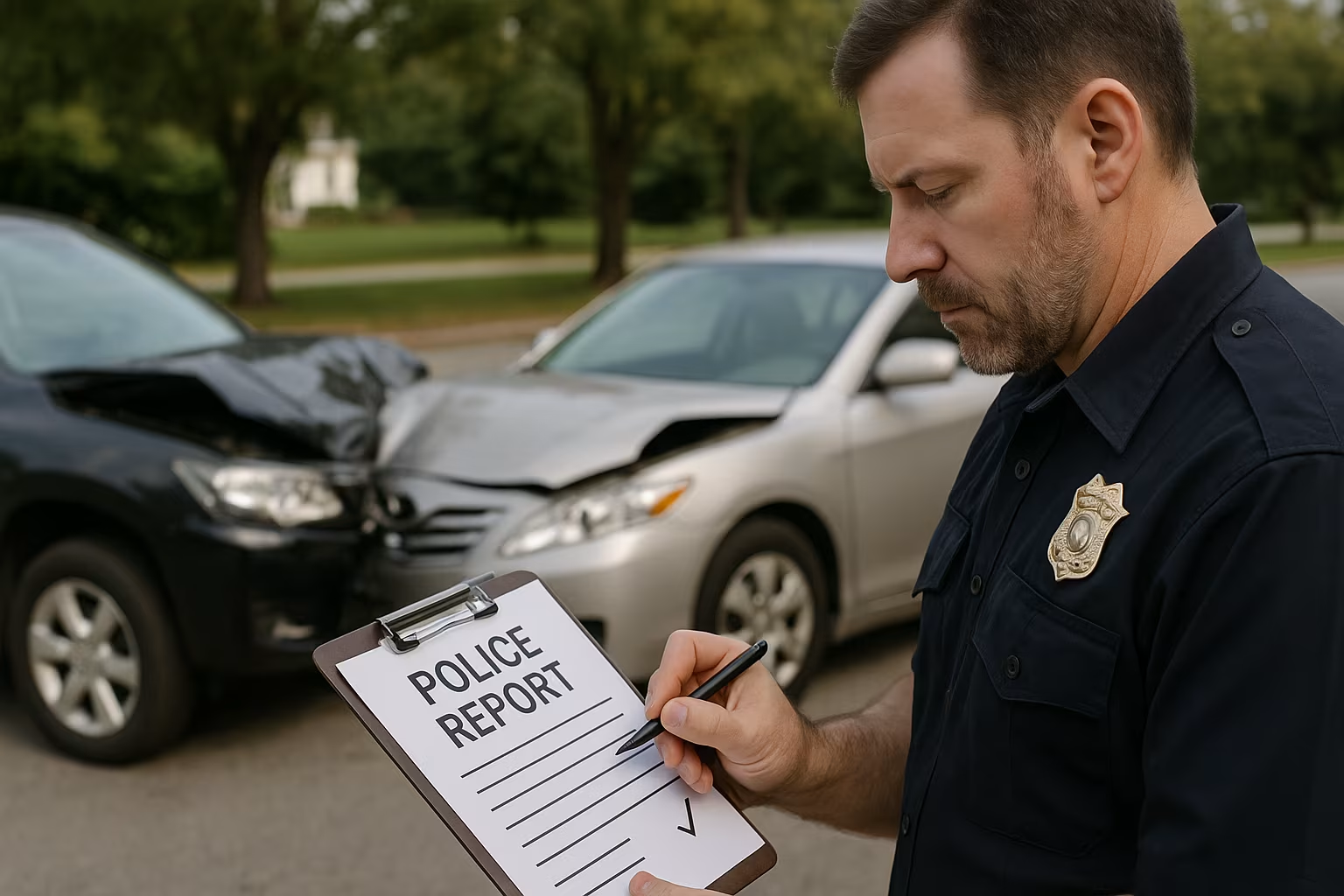
Why Police Reports Matter in Texas Car Accident Lawsuits
Most accident victims think police reports are just paperwork for insurance claims.
But these documents carry far more weight, they shape settlement negotiations, influence jury perceptions, and can determine whether your case succeeds or fails.
Insurance companies treat police reports like gospel, using them to deny claims or lowball settlements. They know most people won’t challenge an officer’s findings, even when those findings are wrong.
This makes understanding your police report’s strengths and weaknesses crucial for protecting your legal rights.
In Texas, the standard CR-3 form contains specific codes and narratives that lawyers scrutinize for lawsuit strategy. Every checkbox, diagram, and written statement becomes potential evidence that either supports or undermines your case.
Understanding the Texas CR-3 Police Crash Report
The Texas Peace Officer’s Crash Report (CR-3) isn’t just any accident form. It is a standardized document that officers must complete for reportable crashes.
Updated in 2023, this form captures everything from weather conditions to contributing factors that directly impact liability determinations.
Key Sections That Matter in Lawsuits
The narrative section often becomes the most contested part of any police report. Officers write their interpretation of events here, which insurance companies and defense attorneys dissect for ammunition against your claim.
Contributing factors in police reports carry surprising legal weight. When an officer marks “failed to yield” or “following too closely,” these selections create presumptions that require evidence to overcome.
The crash diagram similarly tells a visual story that can support or contradict witness testimony.
Information Often Missing from Reports
Officers can’t capture everything at chaotic accident scenes.
They might miss crucial witness statements, overlook vehicle defects, or misunderstand complex traffic patterns. These gaps create opportunities to strengthen your case with additional evidence.
Are Police Reports Admissible in Texas Court?
Texas Rules of Evidence create a complex framework for using police reports in court. While insurance adjusters can freely reference every detail, judges restrict what juries can actually see.
The Hearsay Challenge
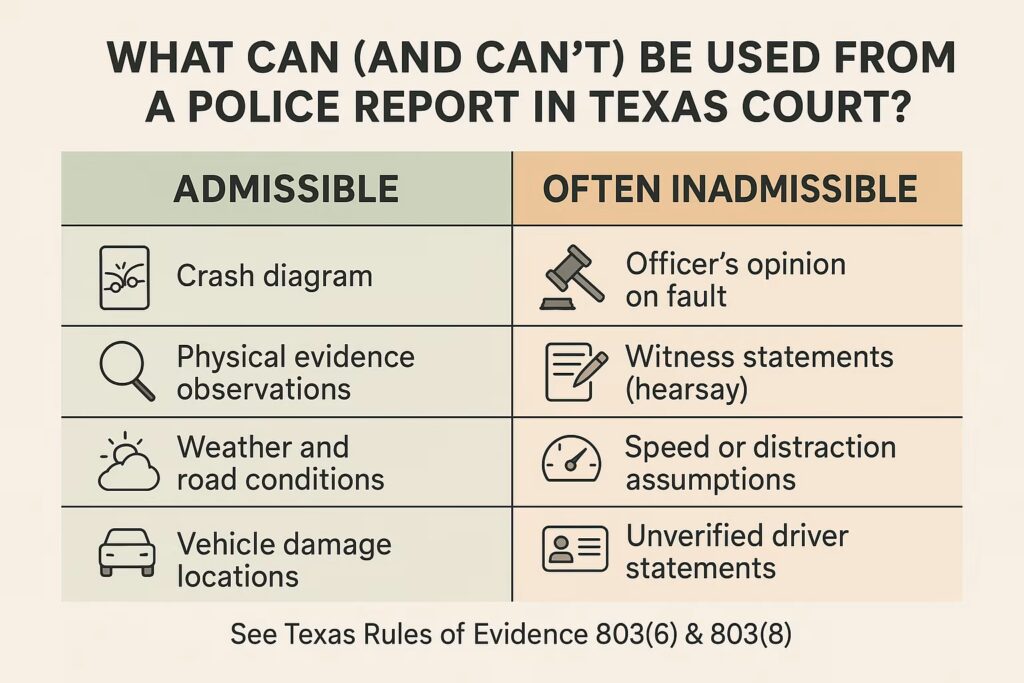
Most police report contents qualify as hearsay, out-of-court statements offered to prove the truth of what they assert.
Texas Rules of Evidence 803(6) and 803(8) provide limited exceptions for business records and public records, but these don’t automatically make entire reports admissible.
Factual observations like vehicle positions, physical damage, and weather conditions typically qualify for admission.
But conclusions about fault, opinions about speed, and witness statements face higher scrutiny. This distinction becomes critical when preparing for trial versus settlement negotiations.
What Juries Can and Cannot See
Judges often allow testimony about the officer’s observations while excluding their written conclusions.
An officer might testify about skid marks they measured but not their opinion about who caused the crash.
Understanding these nuances helps Dallas car accident attorneys build stronger cases that don’t rely solely on report conclusions.
How Police Reports Affect Settlement Negotiations
Insurance companies weaponize police reports during settlement talks, knowing most cases never reach trial. They’ll quote unfavorable findings repeatedly, hoping you’ll accept their lowball offer rather than fight back.
A favorable police report accelerates settlements by giving adjusters clear justification to pay claims.
When the report assigns fault to the other driver with supporting evidence, insurance companies face pressure to settle fairly.
But even strong reports require skilled negotiation to maximize compensation.
Unfavorable reports demand strategic countermeasures. Houston personal injury lawyers know how to present contradicting evidence, highlight report inconsistencies, and demonstrate why initial fault findings don’t tell the complete story.
The goal is shifting focus from the report’s conclusions to actual evidence of negligence.
What to Do if the Police Report Hurts Your Case
A bad police report isn’t a death sentence for your lawsuit. Many successful cases overcome initial unfavorable findings through careful evidence development and strategic legal arguments.
Identifying Factual Errors
Start by comparing the report against your memory and any documentation you have. Look for incorrect vehicle descriptions, wrong directions of travel, or misidentified witnesses.
Even small factual errors can undermine the report’s overall credibility.
Document discrepancies immediately while memories remain fresh. Take photos that contradict the officer’s diagram, gather witness statements that conflict with the report’s narrative, and preserve any physical evidence that tells a different story.
The Texas Correction Process
Texas law allows disputing incorrect police reports through specific procedures.
You can submit written statements to the investigating agency, though officers rarely change their reports without compelling evidence.
The key is creating an official record of your objections for later use.
Some departments allow amended reports when presented with new evidence like surveillance footage or additional witness statements.
But even unsuccessful correction attempts create valuable documentation showing you challenged inaccurate findings from the start.
Common Misconceptions About Police Reports in Lawsuits
Many accident victims give up after reading unfavorable police reports, believing these documents represent final legal judgments.
This misconception costs them fair compensation they deserve.
“The Police Report Determines Fault”
Police officers aren’t judges or juries. They’re investigators creating preliminary reports under difficult conditions.
Their fault determinations carry no legal weight in civil lawsuits. Texas courts require actual evidence of negligence, not just an officer’s opinion formed during a brief investigation.
“I Can’t Win if the Report Blames Me”
Countless Texas car accident lawsuits succeed despite unfavorable police reports. Officers often miss critical evidence, misunderstand traffic laws, or simply get the story wrong.
Your ability to present contradicting evidence matters far more than initial police findings.
Insurance companies hope you’ll believe police reports are unchangeable verdicts. They count on this misconception to pressure unfair settlements on accident victims who don’t understand their legal rights.
When to Get a Lawyer Involved
Certain police report situations demand immediate legal intervention. Waiting too long can cement unfavorable findings and limit your strategic options.
Complex liability scenarios require professional analysis of police reports.
When multiple vehicles are involved, conflicting statements exist, or commercial vehicles participated, car accident representation becomes essential. These cases involve nuanced legal arguments that go beyond simple fault determinations.
Reports missing critical details also warrant legal review.
If the officer didn’t interview key witnesses, failed to note important physical evidence, or overlooked contributing factors, an attorney can investigate and supplement the official record.
This additional evidence often transforms weak cases into strong ones.
Any report assigning you significant fault deserves professional scrutiny. Even partial fault findings can devastate your compensation under Texas’s modified comparative negligence rules.
Early legal intervention protects your rights and challenges unfair fault assignments.
Free Police Report Review from a Texas Car Accident Lawyer
Understanding your police report’s impact on potential lawsuits requires experienced legal analysis. The codes, narratives, and diagrams that seem straightforward often hide critical details that affect your case value.
At Angel Reyes & Associates, we’ve spent over 30 years analyzing Texas CR-3 forms and turning unfavorable reports into successful settlements.
We know which report sections matter most, how to challenge incorrect findings, and when additional investigation can overcome bad initial reports.
Don’t let an unfavorable police report stop you from seeking fair compensation. Our team reviews police reports for insurance claims and lawsuits, identifying strategies to strengthen your case regardless of initial findings.